Trees That Pose Real Threats to Property
Tree Removal in Franklin for dead, diseased, or hazardous trees threatening homes and structures
A dead oak leaning toward your roofline or a diseased pine near utility lines creates liability that grows with every storm system. Parker Tree Service LLC removes trees that pose documented risks to homes, outbuildings, driveways, and power infrastructure across Franklin and the surrounding communities. The work involves rigging systems, directional felling, and sectional dismantling that prevent secondary damage during removal.
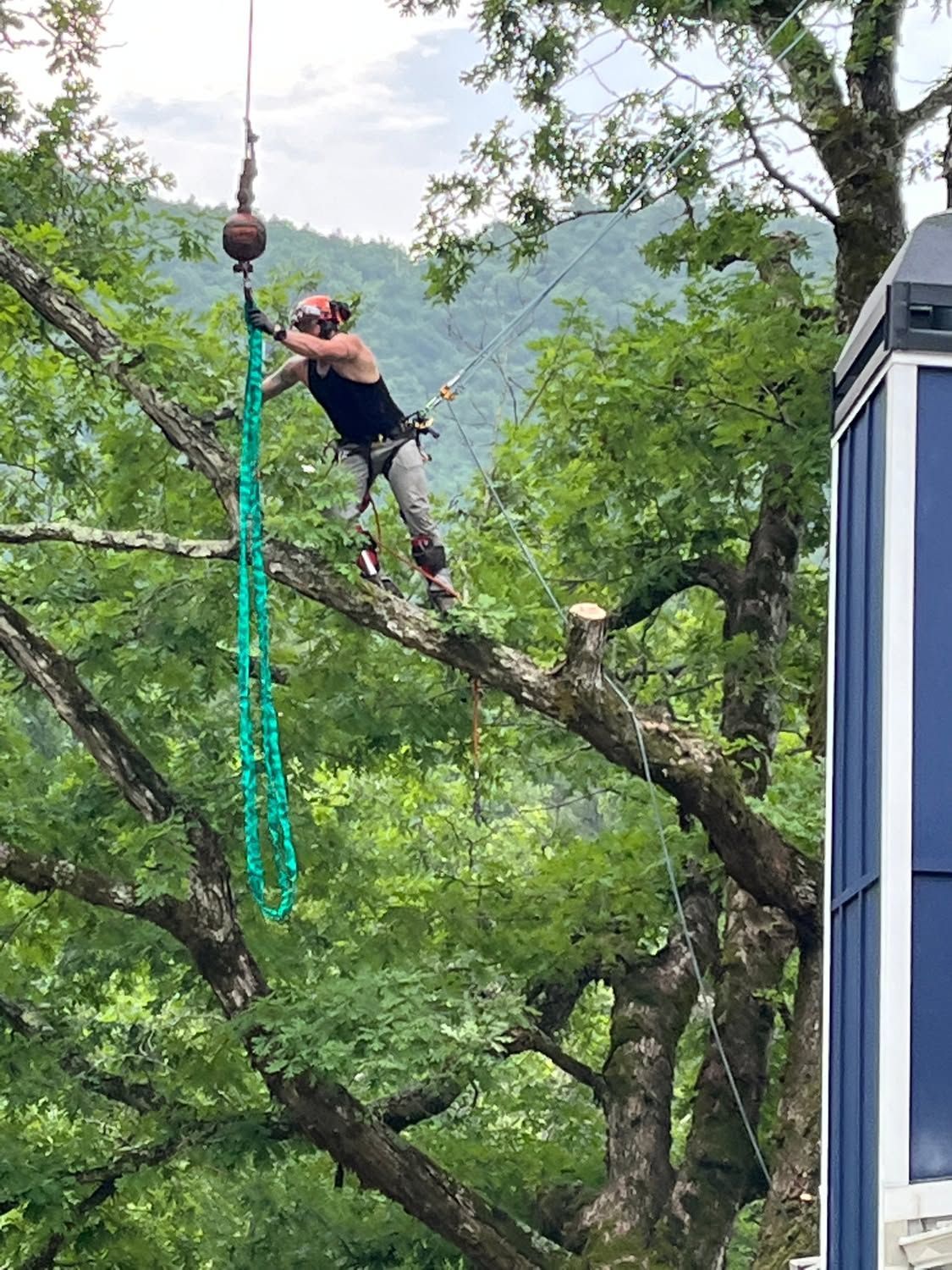
This service addresses trees compromised by disease, storm damage, root failure, or structural decay that can no longer stand safely on the property. In some cases, crane-assisted removal becomes necessary when trees are positioned too close to structures for conventional rigging or when the work zone cannot accommodate a safe drop path. The method depends on lean angle, decay extent, surrounding obstacles, and access limitations specific to each property.
Schedule a property evaluation to identify trees that present measurable risk to structures or access routes.
Removing a hazardous tree requires rigging to control every section as it comes down, preventing damage to fencing, landscaping, or nearby structures. The crew assesses lean direction, weight distribution, and decay location before making any cuts, then uses ropes and pulleys to guide limbs and trunk sections safely to the ground.
Once the tree is down, you gain clear sightlines across the property, eliminate the risk of falling limbs during future storms, and remove the ongoing liability of a failing tree near high-traffic or high-value areas. The work also clears space for replanting, construction, or simply restoring usable yard area that was previously overshadowed by a declining or dangerous tree.
Both residential and commercial properties require removal services, whether addressing a single backyard hazard or clearing multiple compromised trees from a commercial site. The timeline and equipment needs shift based on tree size, location constraints, and whether crane access is required to reach over structures or navigate tight work zones.
Questions Property Owners Ask Before Scheduling
Tree removal decisions often depend on understanding what the work entails and how specific site conditions affect the approach.
What determines whether a tree needs crane-assisted removal?
Trees positioned within ten feet of a home, those with significant lean toward structures, or trees surrounded by fencing or landscaping that cannot be disturbed often require crane support to lift sections vertically rather than dropping them through a conventional fall path.
How is hazardous tree removal different from standard removal?
Hazardous removal prioritizes controlling unpredictable failure points in decayed or damaged trees, often requiring more rigging points, smaller sectional cuts, and additional crew coordination to manage wood that may split or collapse unexpectedly during cutting.
When should I schedule removal for a tree near power lines?
Trees within fifteen feet of utility lines require notification to the power company and may involve temporary service disconnection depending on line voltage and tree positioning, so scheduling typically requires advance coordination beyond the tree service itself.
What happens to the wood and debris after removal?
Most removal services include limb chipping and log sectioning, with larger trunk sections either removed from the site or cut into firewood lengths and stacked if you request that option during the estimate process.
How do soil conditions in Franklin affect tree stability?
The clay-heavy soils common throughout the region hold moisture longer after rain events, which can accelerate root rot in trees with compromised root systems and contribute to sudden failure during high winds even when the visible canopy appears intact.
Parker Tree Service LLC handles removals across residential and commercial properties where trees threaten structures, utilities, or safe access. Call (828) 342-3318 to arrange an estimate based on specific tree condition and site access requirements.